Human-centric lighting is becoming one of the most discussed topics in architecture, interior design, and wellness-focused spaces.
But it is also one of the easiest topics to oversimplify.
It is not just a “healthy LED.” It is not just warm-to-cool tunable lighting. It is not just high CRI, full-spectrum technology, or a control app.
At its best, human-centric lighting is a design approach that considers how light affects visibility, comfort, material appearance, mood, daily rhythm, and the way people experience a space.
At its worst, it becomes another marketing label.
That gap between science, product marketing, and real-world execution is exactly why architects and interior designers should bring lighting expertise into the conversation earlier.
Before working more deeply in lighting design, I spent more than a decade in lighting fixture R&D, working with LED technology, fixture performance, optics, drivers, spectrum, color quality, and product development. That experience shaped the way I look at this topic.
I do not see human-centric lighting as simply choosing a better light source.
I see it as the point where design intent, LED technology, wellness research, controls, and real project execution meet.
Over the last decade, LED technology has evolved far beyond basic efficiency. We now have high-CRI sources, fuller-spectrum LEDs, cyan-enhanced spectra, warm-dim systems, tunable white, and multi-channel solutions. Some are designed primarily for color quality. Others aim to create a smoother spectral power distribution or support stronger daytime biological stimulus.
These technologies can be valuable.
But no LED package, by itself, guarantees a human-centric result.
A fixture may have excellent spectrum data on paper. It may be marketed as daylight-like or biologically supportive. But if it is placed poorly, creates glare, has poor dimming, lacks proper controls, or is never commissioned correctly, the result can still fail the people using the space.
This is where many projects fall short.
Human-centric lighting is not just a fixture schedule decision at the end of the project. It requires early coordination between architecture, interiors, lighting, electrical systems, controls, daylight, finishes, and user behavior.
In real projects, the gap often shows up in practical ways:
The lighting is selected too late. The fixture has good spectrum but poor glare control. The controls are too complicated for the owner. The ceiling plan does not support the lighting strategy. The dimming is not smooth. The scene programming is never commissioned. The value-engineered substitute changes the spectrum, driver, beam angle, or color quality.
This is why human-centric lighting cannot be treated as a product trend alone.
The current direction of lighting research is not simply “more blue light” or “brighter light.” A better way to describe it is:
The right light, at the right time, in the right place.
For daytime environments, that may mean better access to daylight, higher-quality electric light, improved vertical light exposure, and lighting that supports alertness and visual comfort.
For evening environments, that may mean warmer, lower-level lighting, reduced glare, softer transitions, and scenes that support relaxation.
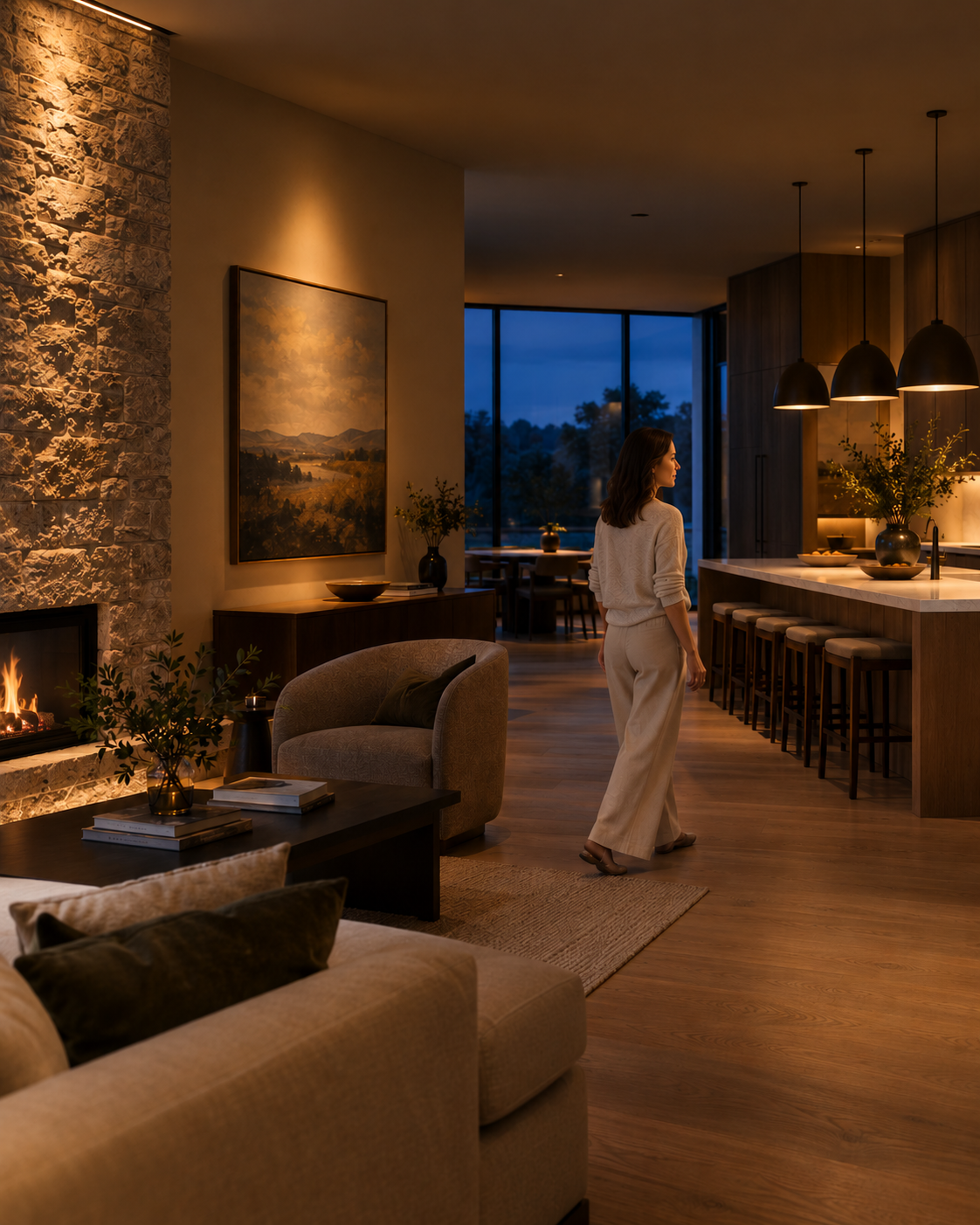
For homes, it may mean morning scenes that feel brighter and more energizing, evening scenes that feel calmer, and night lighting that supports safe movement without over-lighting the space.
For workplaces, it may mean balancing visual clarity, comfort, daylight integration, and lighting that supports focus throughout the day.
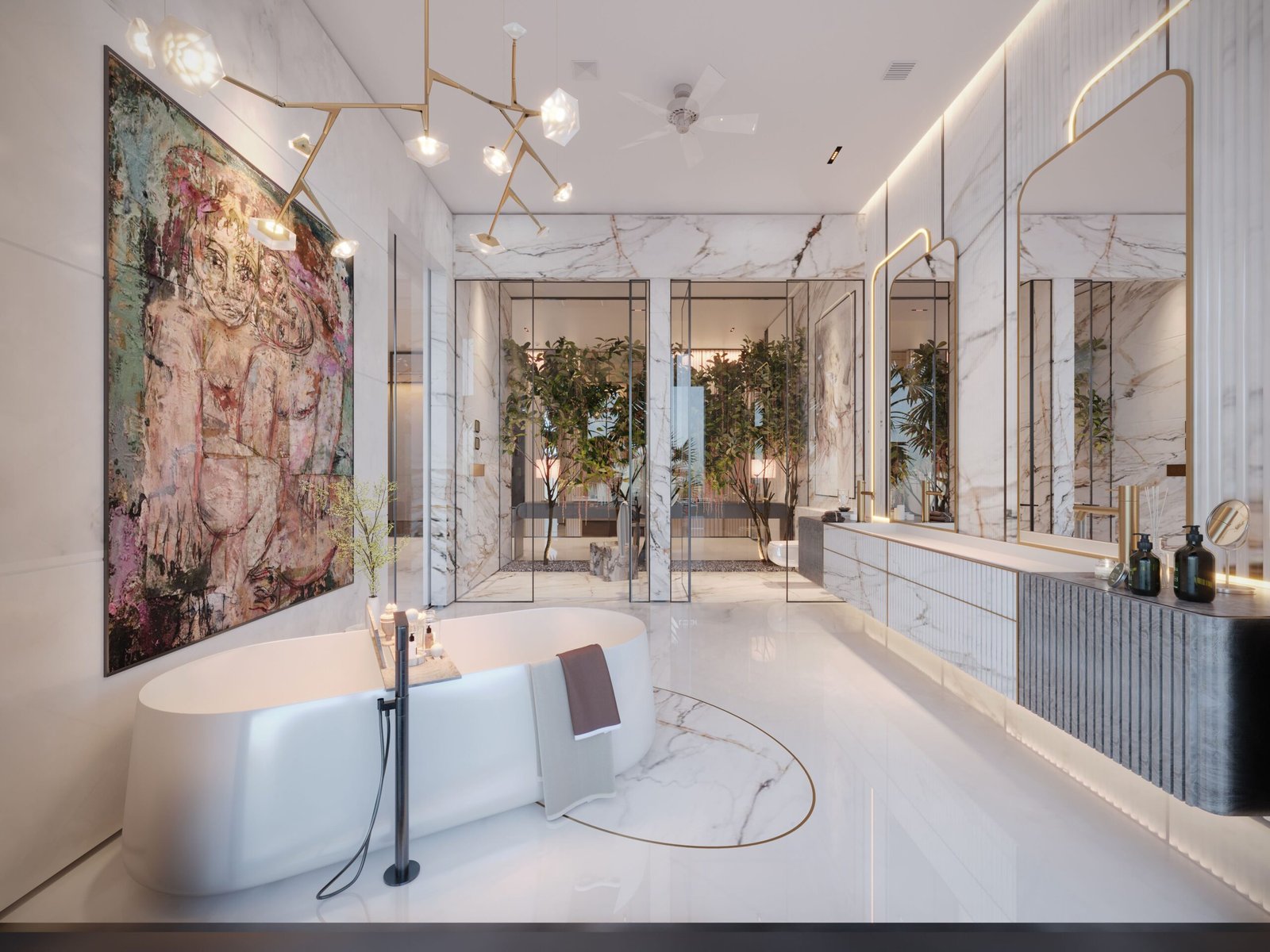
For hospitality, retail, and showrooms, it may mean using layered lighting and high-quality spectrum to make people, materials, food, art, finishes, and products appear natural and emotionally engaging.
For senior living, healthcare, and education, it may mean paying closer attention to visual clarity, circadian support, safety, glare, and comfort.
This is where architects and interior designers play a critical role.
Architects shape daylight, volume, ceiling conditions, spatial rhythm, and the relationship between people and the built environment.
Interior designers shape materials, finishes, color palettes, textures, furniture, atmosphere, and emotional experience.
Lighting designers help translate those design intentions into measurable, controllable, and buildable lighting performance.
That includes evaluating spectrum, color quality, glare, beam angles, dimming, flicker, control zones, scene programming, fixture placement, and commissioning.
The goal is not to make the project more complicated.
The goal is to make better decisions earlier.
Before specifying human-centric lighting, design teams should ask:
What activities happen in this space throughout the day?
How much daylight is available?
Where does light reach the occupant’s eye?
What materials, skin tones, art, food, fabric, wood, or stone need excellent color rendering?
Where could glare become a comfort problem?
What lighting scenes does the client actually need?
Will the controls be simple enough for daily use?
Who will commission the system after installation?
What product substitutions would compromise the design intent?
Human-centric lighting should not promise more than the research supports. It is not a cure-all, and it should not be sold as one.
But it should also not be ignored.
Light is one of the most powerful environmental inputs in a building. It affects how we see, feel, work, gather, rest, and experience architecture.
At Illumify, our perspective sits at the intersection of LED technology, lighting design, controls, and real-world project execution. We believe human-centric lighting should be credible, buildable, beautiful, and understandable to the people who use the space every day.
The future of lighting design is not only about making spaces brighter.
It is about making light more intentional — visually, biologically, emotionally, and practically.
Human-centric lighting is not a product category. It is a design responsibility.
Selected References
- Houser, K. W. et al. “Human-Centric Lighting: Foundational Considerations and a Five-Step Design Process.” Frontiers in Neurology, 2021.
- CIE Position Statement: “Integrative Lighting: Recommending Proper Light at the Proper Time,” 3rd Edition, 2024.
- Brown, T. M. et al. “Recommendations for daytime, evening, and nighttime indoor light exposure to best support physiology, sleep, and wakefulness in healthy adults.” PLOS Biology, 2022.
- Cajochen, C. et al. “Effect of daylight LED on visual comfort, melatonin, mood, waking performance and sleep.” Lighting Research & Technology, 2019.