

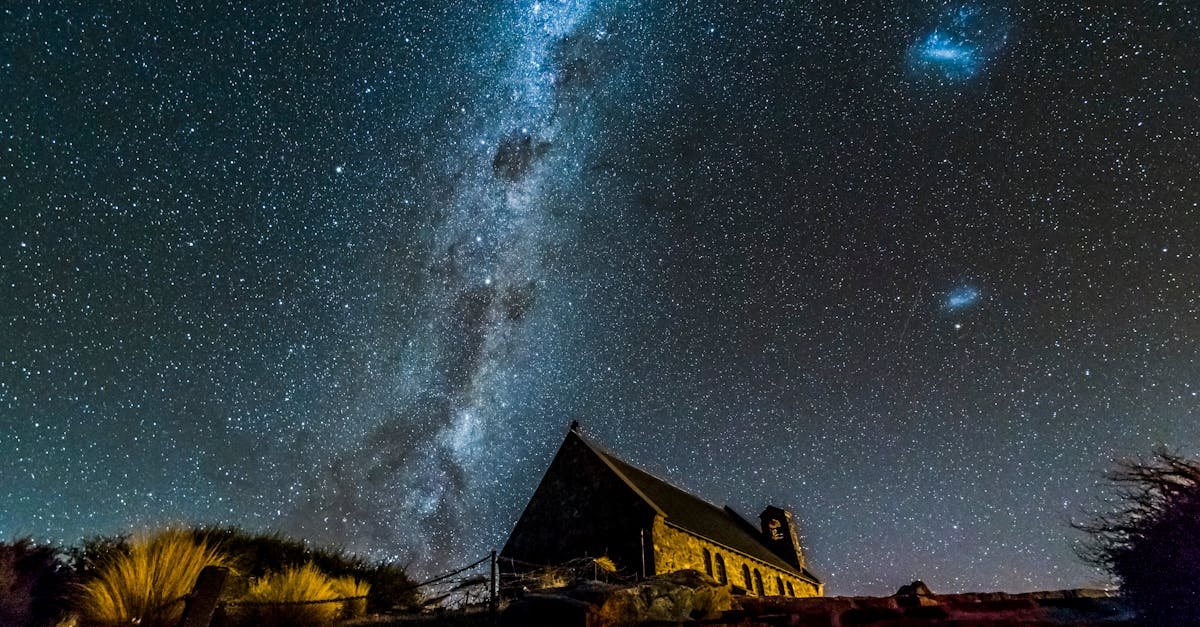
Good landscape lighting is defined as much by what stays dark as by what gets lit. The approach, the trees, the façade, the terrace — each deserves light. The sky, the neighbors’ bedrooms, and the eyes of anyone walking up the drive do not.
That’s the idea behind dark sky lighting, and it’s a useful discipline for any residential landscape, whether or not every fixture carries a certification.
What a DarkSky Approved Luminaire Is
DarkSky International runs an approval program for outdoor fixtures that limit light pollution. For residential luminaires, the core requirements are:
- Fully shielded: the light source isn’t visible from the horizontal, and only a small amount of uplight from reflection is allowed.
- Warm color: 3000K or warmer, with amber sources also permitted.
- Modest output: limits on total lumens per fixture, so light is sized to the task.
Criteria are updated periodically, so check the current program requirements on the DarkSky site before relying on a specific number.
Why It Matters for a Residential Landscape
- Glare control. An exposed source at eye level is the most common landscape lighting complaint. Shielded fixtures let people see the lit object, not the lamp.
- Light trespass. Light that crosses the property line into a neighbor’s window is a nuisance — and in some communities, a code issue.
- Night sky. Poorly shielded fixtures scatter light upward, washing out the stars over the very garden you’re trying to enjoy.
- Sleep and wildlife. Warmer, lower, well-aimed light is gentler on circadian rhythms and on the nocturnal animals that share the property.
- Energy. Light that only goes where it’s needed means fewer watts doing more work.
What About Uplighting Trees and Façades?
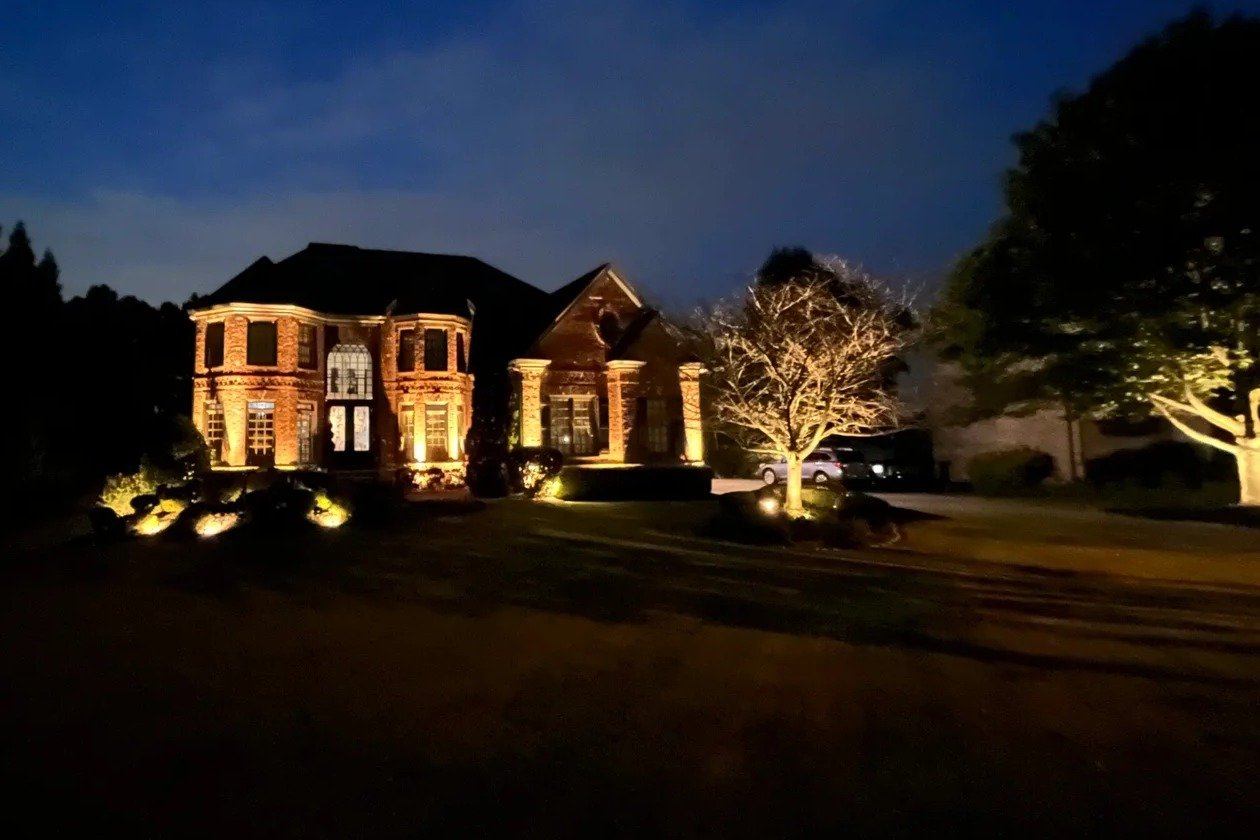
Uplighting a specimen tree or grazing a stone façade sends light upward by design, so those fixtures won’t meet a strict dark sky definition. The principles still apply:
- Aim into the canopy or onto the wall, so the object catches the light instead of the sky.
- Use the narrowest beam that does the job, with glare shields or louvers where the fixture is visible.
- Keep color temperature warm and output low — a landscape at night reads best at a fraction of what a plan suggests.
- Use timers and scenes, so accent lighting dims or turns off late at night while path and entry lighting stays on.
Why These Calls Are Made at Night, On Site
Glare, trespass, and brightness can’t be judged from a plan or a daytime walk. That’s why our landscape process starts with an evening site consultation, tests fixtures with a temporary night mockup before anything is specified, and ends with every adjustable fixture aimed after dark with the installer. You can see the result in our After Dark residential landscape project.
Responsible landscape lighting isn’t about lighting less. It’s about lighting deliberately — and leaving the night sky where it belongs. Learn more about Illumify’s residential landscape lighting.
Illumify is a lighting design firm led by Jared Jin, P.E., LC, MBA, based in Norcross, Georgia. We carry lighting intent from design through commissioning for architects, interior designers, builders, and owners across metro Atlanta and the Southeast. Book a free 30-minute discovery meeting · info@illumifyhome.com · 770-341-0761