When I sit down with a homeowner at the start of a project, I don’t open with fixtures. I ask three questions:
What do you want to see?
What do you want to emphasize?
How do you want to sleep?
The first two shape how a home looks. The third shapes how it works for the people who live there, and it changes the design more than most owners expect.
The floor is the wrong place to measure a home
Most residential lighting plans are judged by one number: how much light reaches the floor or the countertop. More downlights, more light, problem solved.
But people don’t experience a room through the floor. We experience it through what reaches our eyes. That light comes mostly from vertical surfaces: walls, cabinetry, artwork, stone, and the view through a window. Lighting designers call this vertical illuminance.
Two rooms can measure exactly the same at the floor and feel completely different. One feels open, calm and inviting. The other feels flat or dim, or harsh in the evening. The difference is what reaches the eye.
Why light at the eye matters for sleep
Light does more than help us see. It also tells the body what time of day it is. Bright light in the morning helps set the internal clock for the day ahead. Bright, cool light late in the evening sends the opposite signal, telling the body it’s still daytime when it should be winding down.
In a home, this makes lighting part of how a family rests, not just how it sees. The goal is simple to describe: brighter days, darker and warmer evenings. Achieving it takes design.
Designing for the whole day
Good residential lighting follows the family through the day, at the eye level they actually sit and move at.
Morning. Bright walls and daylight at seated eye height at the breakfast table. The kitchen and breakfast areas should feel awake, with light on the surfaces people face, not only on the counter.
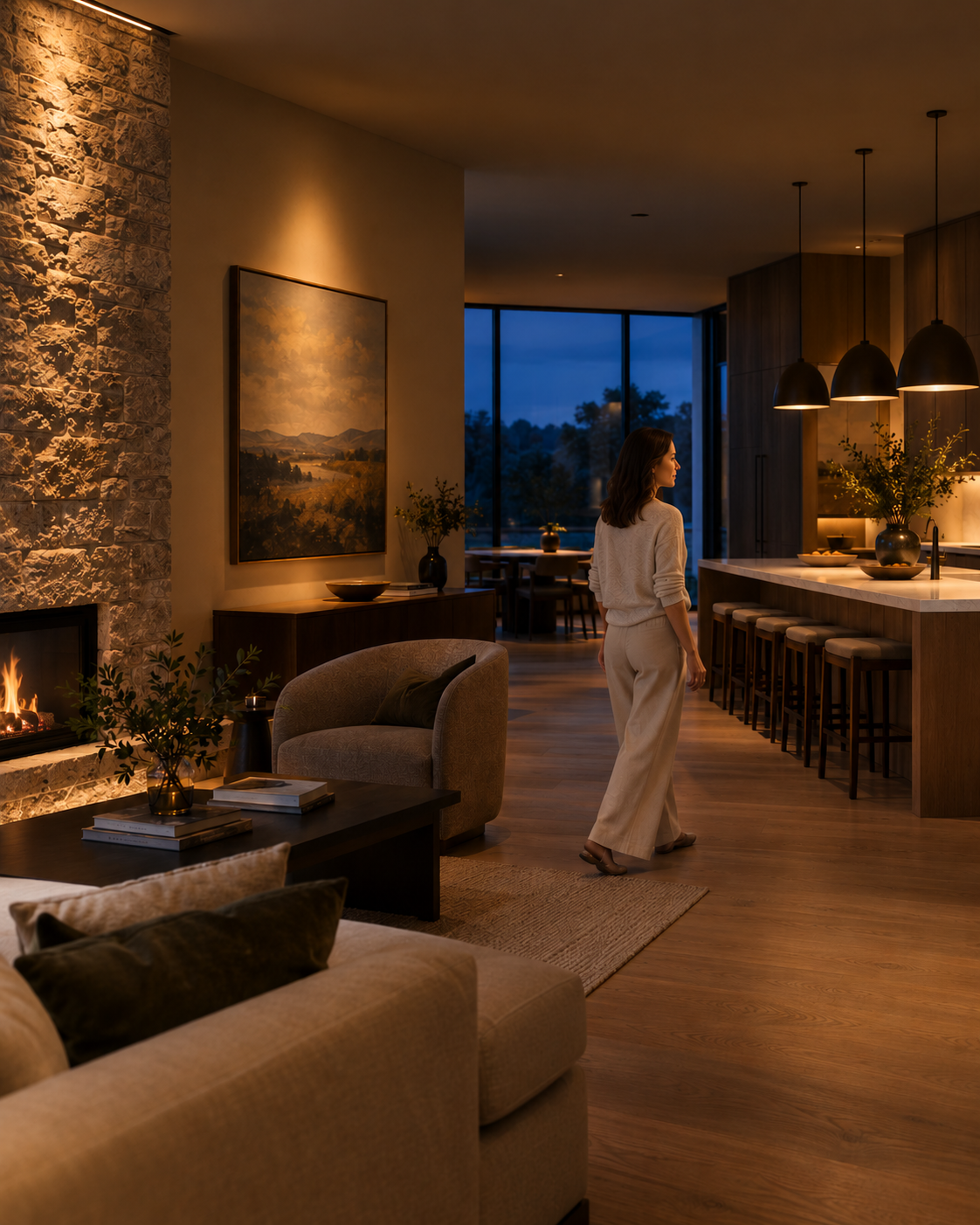
Evening. Less light reaching the eyes, warmer color, and glowing surfaces instead of bright sources overhead. In the image above, the stone fireplace is lit by light grazing down its texture, the artwork has a warm accent light, and the island has a soft pool of light. The ceiling stays quiet. The room is lit, but nothing glares.
Night. Low, shielded light along the path from the bedroom to the bathroom, kept below eye level. A 2 a.m. trip shouldn’t mean switching on full overhead light.
From how you want to live to what gets built
Owners can describe how they want their home to feel. The work of lighting design is turning that into decisions a contractor can build and the controls can run:
- Fixture placement and beam angles that put light on the right surfaces from the right positions
- Color temperature and color rendering, so evening light is warm and skin tones, finishes and art look true
- Fixtures that warm as they dim, so evening scenes feel natural rather than just darker
- Surface finishes, which determine how much light a wall reflects back toward the eye
- Circuit grouping and control scenes for morning, evening and night that run automatically, so the house adjusts without anyone having to think about it
These decisions are easiest and least expensive to make early, before walls and ceilings close. Made late, they become change orders, or they don’t get made at all.
How we work
At Illumify, residential lighting design runs from the first conversation with the owner, architect and interior designer through specification, coordination with the electrical contractor and the low-voltage integrator, and final aiming and commissioning on site. Before decisions are locked in, we test fixtures and lighting scenes in the Illumify Design Lab & Experience Center in Norcross, so owners and design teams can see the difference instead of imagining it.
A home’s lighting should help the people in it sleep well, not just see.
If you’re planning a custom home or renovation in the Atlanta area, we’d welcome a conversation about how you want it to feel, morning to night. [Schedule a conversation →]
Jared Jin, P.E., LC, MBA
Founder & Principal, Illumify