Why hire a lighting designer when the architect, engineer, and contractor all touch the lighting? Because on a complex project, someone has to own the lighting from the first concept to the finished, working system. That is what a lighting designer does, and it is worth more than most people assume.
I came to lighting design after years in lighting product development, working on luminaires, drivers, and controls. That background shapes how Illumify works, and how I see the value of this profession for owners, owner’s representatives, and architects.
One accountable owner for lighting and controls
Lighting decisions are made by many people: the architect, the interior designer, the electrical engineer, the contractor, reps, distributors, and controls integrators. Each decision can change how a space looks and works.
A lighting designer carries the design intent through all of them. We work alongside the architect and the electrical engineer of record, not in place of them. For the architect, that means a partner who protects the design intent. For the owner and owner’s rep, it means one accountable point for lighting and controls.
Code compliance is the starting point
Every lighting system has to meet energy, electrical, fire and life safety, and local building codes, along with recognized lighting practice from organizations such as IES. Meeting code is the minimum.
The design work starts after that: supporting the architecture, highlighting what the interior designer wants people to notice, and solving conditions that off-the-shelf products don’t handle well, while keeping installation and maintenance practical.
A spec sheet tells one story. A mockup can tell another.
Lighting products change more than most people realize. Supply chain disruptions and material costs push manufacturers to substitute components, sometimes every few months. The sample approved last year may not match the product delivered this year, even with the same catalog number.
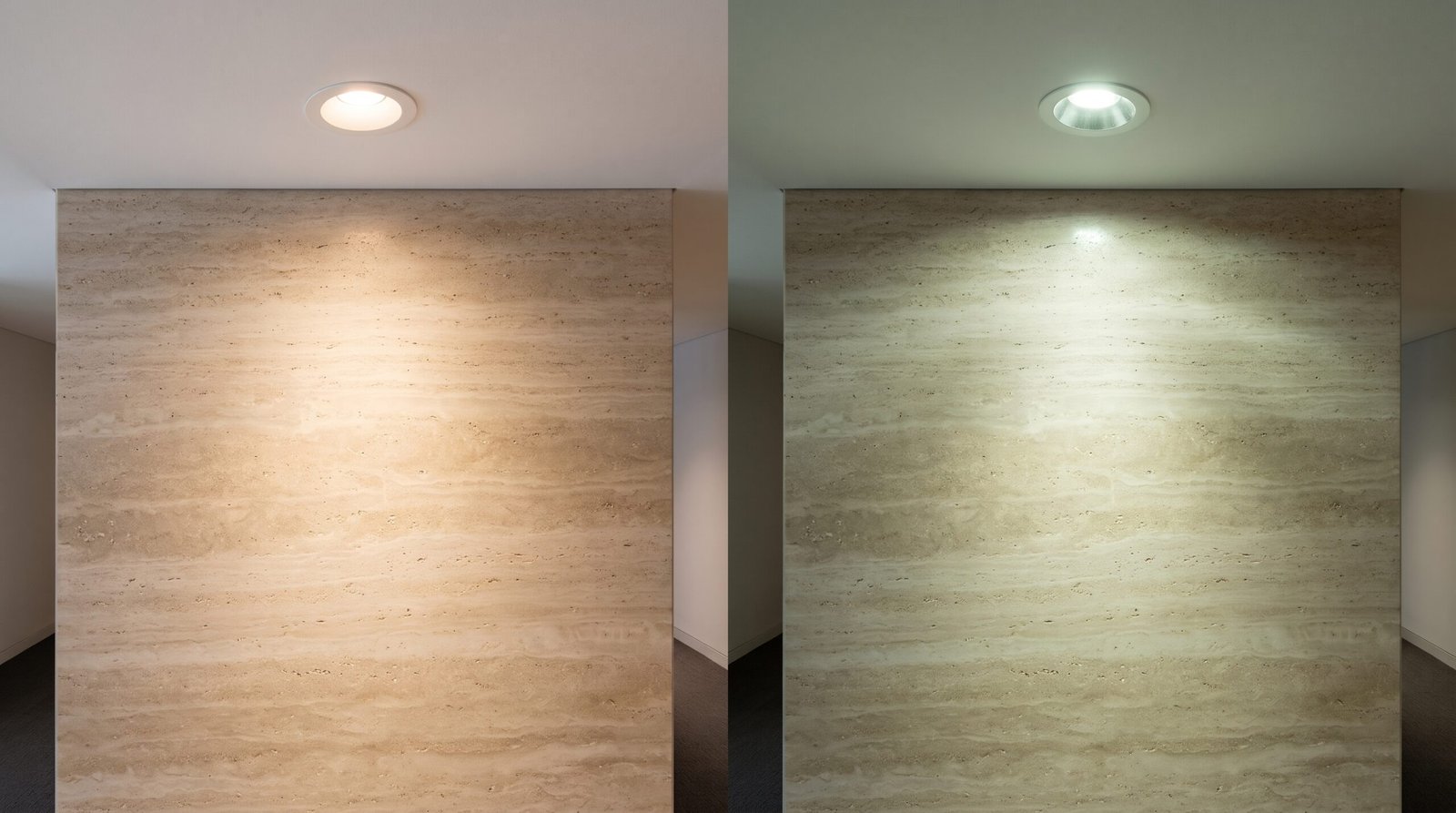
That is why we test. At the Illumify Design Lab in Norcross, we compare candidate products side by side on real finishes. Two products with similar numbers on paper can look very different on your stone, wood, or fabric.
The right product, at the right price, on time
A lighting design only has value if it can be bought, built, and maintained. We look at both sides of each product choice:
- Performance: output, color quality, optical control, glare, and dimming
- Reliability: the manufacturer’s engineering, testing, production control, and service over the product’s life
We also work with manufacturers’ reps and distributors to check pricing, lead times, and alternates during design, and we review substitutions against the performance the design depends on.
Lower risk, fewer late surprises
Hiring a qualified lighting designer works much like insurance. The fee is small compared with the cost of fixing lighting after ceilings and walls are closed.
In hospitality, one lighting decision may repeat across hundreds of guestrooms and corridors. A dimming problem missed in design can become flicker in every room, found at punch list with an opening date approaching.
In a high-end custom home, the owner invests heavily in stone, millwork, and finishes. If the color of light is wrong for the stone, or a lighting scene doesn’t work at move-in, the fix can mean replacing fixtures behind finished ceilings.
Catching these issues early, while the fix is simple, is a core part of our process.
When should you bring in a lighting designer?
The earlier, the better. Lighting decisions shape ceilings, electrical coordination, controls, and budget. Bringing a lighting designer in during concept or schematic design gives the team the most options at the lowest cost.
It is especially worth it for hospitality, healthcare, high-end custom homes, and any project where finishes, architecture, or controls are central to the experience.
See the difference in person
The best way to understand lighting design is to see it. Visit the Illumify Design Lab in Norcross to see lighting and controls in kitchen, living room, bedroom, and bathroom settings, and bring your material samples.
Prefer to call? 770-341-0761